
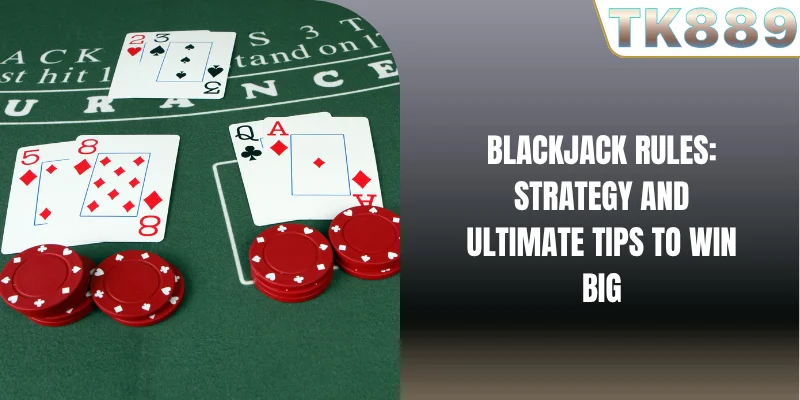
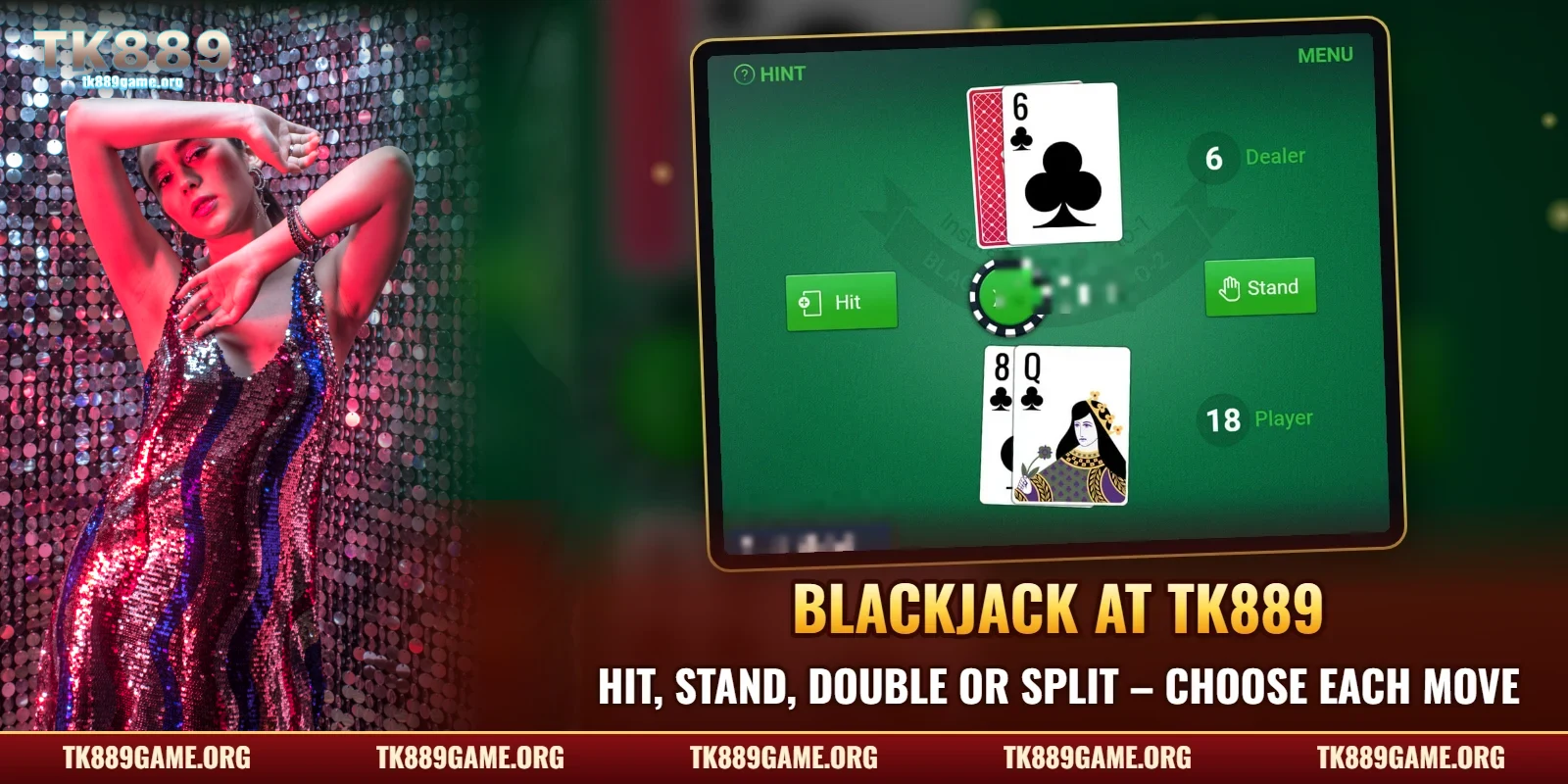
Blackjack rules come down to one goal: finish closer to 21 than the dealer without going over. Cards 2 to 10 count at face value, J, Q and K count as 10, and an Ace counts as 1 or 11, whichever helps the hand. After the first two cards you choose one of four actions: Hit, Stand, Double or Split. The dealer makes no choices and draws by the rule fixed at the table. Every TK889 table opens from one account with a BDT balance; the strategy chart below assumes six decks and a dealer who stands on soft 17, so check the rule shown at your table first.
Basic strategy table in Blackjack rules
The tables below illustrate Blackjack basic strategy for six decks, a dealer who stands on soft 17, doubling on any initial two cards, doubling after splits, a dealer blackjack check before player actions, and no surrender. Different rules require a different chart. Basic strategy guides decisions but does not guarantee a winning hand. Read pairs first, then soft totals, then hard totals.
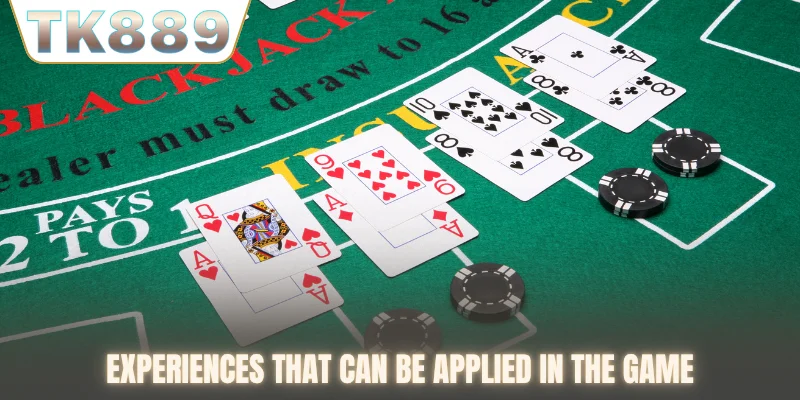
Each cell in the three tables shows one letter for your hand (left column) against the dealer’s upcard (top row); the legend below explains what H, S, D, Ds and P stand for.
- H (Hit): Draw another card.
- S (Stand): Stand.
- D (Double): Double if allowed, otherwise Hit.
- Ds: Double if allowed, otherwise Stand.
- P (Split): Split.
Table 1: Pairs
| Your Pair | Dealer: 2 | 3 | 4 | 5 | 6 | 7 | 8 | 9 | 10 | Ace (A) |
|---|---|---|---|---|---|---|---|---|---|---|
| A, A | P | P | P | P | P | P | P | P | P | P |
| 10, 10 | S | S | S | S | S | S | S | S | S | S |
| 9, 9 | P | P | P | P | P | S | P | P | S | S |
| 8, 8 | P | P | P | P | P | P | P | P | P | P |
| 7, 7 | P | P | P | P | P | P | H | H | H | H |
| 6, 6 | P | P | P | P | P | H | H | H | H | H |
| 5, 5 | D | D | D | D | D | D | D | D | H | H |
| 4, 4 | H | H | H | P | P | H | H | H | H | H |
| 3, 3 | P | P | P | P | P | P | H | H | H | H |
| 2, 2 | P | P | P | P | P | P | H | H | H | H |
Table 2: Soft Totals (Contains an Ace counted as 11 points)
| Your Soft Total | Dealer: 2 | 3 | 4 | 5 | 6 | 7 | 8 | 9 | 10 | Ace (A) |
|---|---|---|---|---|---|---|---|---|---|---|
| A, 9 (20) | S | S | S | S | S | S | S | S | S | S |
| A, 8 (19) | S | S | S | S | S | S | S | S | S | S |
| A, 7 (18) | S | Ds | Ds | Ds | Ds | S | S | H | H | H |
| A, 6 (17) | H | D | D | D | D | H | H | H | H | H |
| A, 5 (16) | H | H | D | D | D | H | H | H | H | H |
| A, 4 (15) | H | H | D | D | D | H | H | H | H | H |
| A, 3 (14) | H | H | H | D | D | H | H | H | H | H |
| A, 2 (13) | H | H | H | D | D | H | H | H | H | H |
Table 3: Hard Totals (No Ace or Ace counted as 1 point)
| Your Hard Total | Dealer: 2 | 3 | 4 | 5 | 6 | 7 | 8 | 9 | 10 | Ace (A) |
|---|---|---|---|---|---|---|---|---|---|---|
| 17 or more | S | S | S | S | S | S | S | S | S | S |
| 16 | S | S | S | S | S | H | H | H | H | H |
| 15 | S | S | S | S | S | H | H | H | H | H |
| 14 | S | S | S | S | S | H | H | H | H | H |
| 13 | S | S | S | S | S | H | H | H | H | H |
| 12 | H | H | S | S | S | H | H | H | H | H |
| 11 | D | D | D | D | D | D | D | D | D | H |
| 10 | D | D | D | D | D | D | D | D | H | H |
| 9 | H | D | D | D | D | H | H | H | H | H |
| 8 or less | H | H | H | H | H | H | H | H | H | H |
Players who want a simpler card game can start with Hi-Lo, where each round is a single higher-or-lower call.
Core content in Blackjack rules
When learning about Blackjack rules, you will find that this rule set is designed around simplicity yet is full of strategy. This game does not require you to calculate as complexly as Poker, but rather focuses on making accurate decisions based on the total points currently in your hand compared to the dealer’s upcard.
The essence of these basic rules revolves around managing the risk of busting (exceeding 21 points) and maximizing winning opportunities through smart action choices. Mastering this foundation will help you confidently step into any betting table from traditional to online without fear of being confused by unexpected situations.
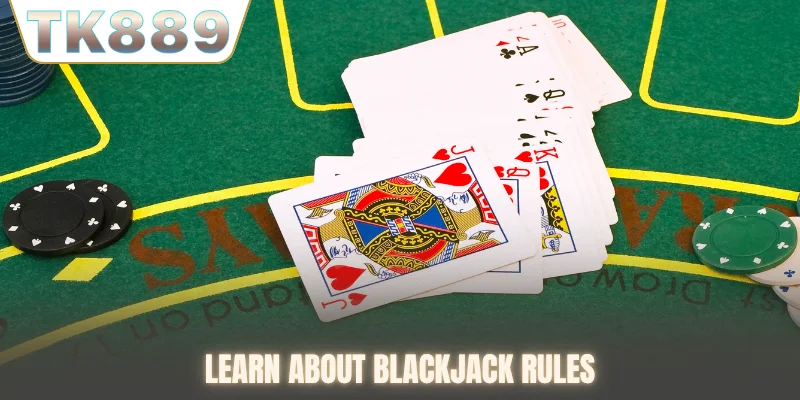
Calculating the 21 points scale and card values in Blackjack rules
Within the framework of Blackjack rules, the 21 points milestone is the ultimate limit determining the win or loss of a hand. Understanding how to convert the value of each card will help you quickly calculate the total points and make the most accurate decisions:
- Cards from 2 to 10: Point values match the numbers displayed directly on the card face.
- Face cards (J, Q, K): All counted as 10 points.
- Ace card (Ace – A): The most flexible card in the deck. It can be counted as 1 point or 11 points, depending on the total points of the hand to bring the most profitable advantage to the player without busting.
Basic actions in a Blackjack hand
According to standard Blackjack rules, right after being dealt the first two cards, you will have the right to make action choices based on your actual situation and the dealer’s upcard to optimize your winning chances.
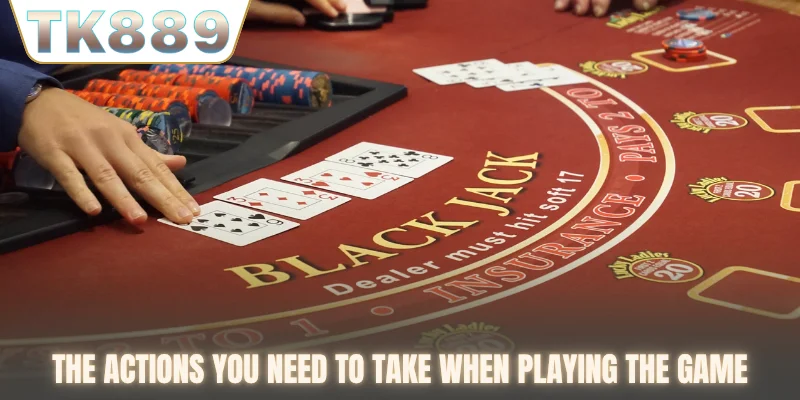
Hit
In the Blackjack rules system, the Hit action means you ask the dealer to deal one more card to increase your total points. You should note that you can draw multiple times until you feel satisfied with your current score or bust – exceeding 21 points and losing immediately.
Stand
According to the TK889 Blackjack rules standards, the Stand action means you decide to keep your current total points and end your turn, passing the turn to the dealer or the next player. You should note to choose this action when you already possess a relatively high score and feel that the risk of drawing another card is too large.
Double
Based on Blackjack rules standards, the Double action means you have the right to double your initial bet amount immediately after receiving the first two cards. You should note that when choosing Double, you are only allowed to receive exactly one additional card and then must stop. This action will be extremely effective when you hold a total of 10 or 11 points in your hand and the dealer is in a weak position.
Split
According to Blackjack rules, the Split action means if the first two cards have the same value (like a pair of 8s or two Js, Qs), you can split them into two separate hands. You need to note to place an additional amount equal to the initial bet for the new hand, then each hand will play independently as normal.
Blackjack tips and tricks for beginners
Three habits make Blackjack rules easier to apply at a live table. First, choose the table before the bet: check that the rules match the chart (six decks, dealer stands on soft 17, doubling after splits, no surrender) and that the minimum stake fits your budget, because a different rule set calls for a different chart. Second, set a BDT bankroll for the session, keep each bet a small fixed share of it and stop when the limit is reached, win or lose. Third, use the chart in order: pairs first, then soft totals, then hard totals, and decide before the betting timer runs out. The chart improves decisions but does not guarantee a winning hand.
Blackjack rules questions
What happens if my hand goes over 21?
You bust and lose the hand immediately, even if the dealer later busts too. This is why hard totals of 17 or more are always a Stand in the chart.
When am I allowed to Double?
Only right after the first two cards. You double the initial bet, receive exactly one more card and then must stop. The chart marks it D or Ds, most often on totals of 10 or 11 against a weak dealer upcard.
Which hands can I Split?
Any two cards of the same value, such as a pair of 8s or two Js, Qs or Ks. You place a second bet equal to the first and each hand is then played on its own. The chart keeps 10, 10 as a Stand and 8, 8 as a Split against every dealer card.
Does the basic strategy chart work at every table?
No. The three tables assume six decks, a dealer who stands on soft 17, doubling on any first two cards, doubling after splits and no surrender. If the table shows other rules, a different chart applies.
Conclusion
Understanding when to Hit, Stand, Double or Split, combined with a chart that matches the active table rules, helps players apply Blackjack rules consistently. Blackjack belongs in the TK889 Live Casino category, where table limits and the betting timer should be checked before the first hand. For a dealer-led game with fixed drawing rules rather than player hand decisions, compare the format with Live Baccarat.